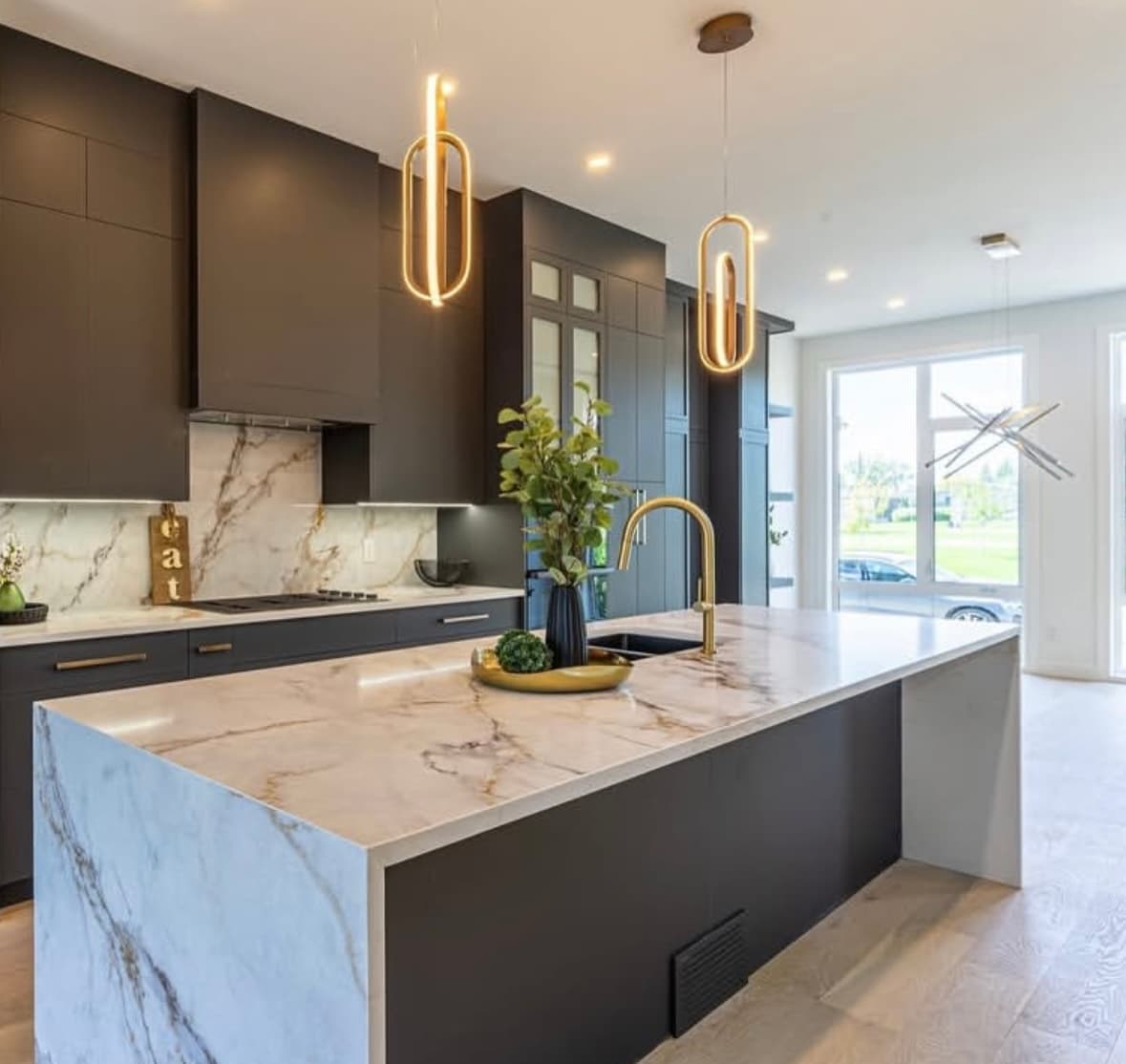
CUSTOM FABRICATION
PUBLISH WHAT YOU WILL NOT QUOTE.
Your estimator's calendar is the constraint, not your enquiry count. Every hour spent taking off a package the shop was never going to win is an hour not spent on one it could.
WHO THIS IS FOR
Shops that sell hours against a drawing somebody else supplied: structural and miscellaneous steel, architectural metalwork, millwork and casework, stone and countertop fabrication, tanks and pressure work. If your day is governed by how many packages one estimator can take off, this page is written for you.
WHO THIS IS NOT FOR
If you produce repeatable parts against a part number rather than quoting against a supplied drawing, you are a manufacturer, and the distinction is commercial rather than semantic — described wrongly, you will receive production enquiries for thousands of pieces at a unit price, each of which costs your estimator an afternoon. Manufacturing is the page that fits.
WHAT ACTUALLY BREAKS
THE PROBLEMS WORTH PAYING TO FIX.
01
Your quoting capacity is the bottleneck and your enquiry stream is untargeted
The estimator is the constraint. Every hour spent on a package the shop was never going to win — wrong size, wrong scope, wrong finish, wrong payment terms — is an hour not spent on one it could. The engagement's job is to make the shop's envelope explicit before the RFQ arrives: maximum plate thickness, maximum member length, bed sizes, crane capacity, finishes available in house, certification scope, supply-only versus supply-and-install, typical package size, and the work the shop declines. Publishing what you will not quote is one of the highest-return content decisions a fabricator can make, and almost none of them do it.
02
You are described as a manufacturer, so you get production enquiries you cannot serve
A fabricator sells shop hours against a drawing. A manufacturer sells repeatable parts against a part number. Describing a fabrication shop with manufacturing language attracts a buyer looking for five thousand pieces at a unit price, and that enquiry can consume an estimator's afternoon before anyone realises it is the wrong business entirely. Correcting it — in copy, in schema, in llms.txt and in directory categorisation — costs nothing and reclaims real hours.
03
Your RFQs arrive without drawings, so every quote starts with a chase
A contact form offering a text box gets can you give me a price on some stairs. An intake designed for fabrication asks for the drawing set and revision level, the material and grade, the finish specification, the quantity, whether it is supply only or supply and install, the required-on-site date and the delivery address — with multi-file upload that accepts the formats the trade actually uses. That single change moves a measurable share of estimator time from chasing to quoting.
04
The work that proves you is the work nobody can see
A fabricator's real credential is the hard job: the architecturally exposed structural steel package, the mitred waterfall with a book-matched vein, the tank that passed hydro first time, the stair with a continuous handrail through three changes of direction. That evidence lives on phones. Structured project records — scope, material, finish, tonnage or square footage, category or standard met, shop hours, install conditions, and what made it difficult — convert it into the most persuasive and most searchable asset the shop owns, because a general contractor looking for someone who can do that work is searching for exactly that phrase.
05
The designer, the general contractor and the plant all search differently
An interior designer searches by material, finish and edge profile. A general contractor's purchaser searches by trade package and scope language. A plant maintenance planner searches by repair capability and turnaround window. One undifferentiated services page serves none of them. Separating the surfaces by buyer — and by the vocabulary each one actually uses — is the structural core of the search work here.
WORK IN THIS INDUSTRY
WE HAVE BUILT FOR THIS INDUSTRY.
- Diamond Granite & Quartz
A real build for an Alberta fabrication business, on our portfolio. The build only — no quote volumes, hit rates or revenue figures are published for any client. See the portfolio.
WORKED SCENARIO
WHAT THE ENGAGEMENT LOOKS LIKE.
Illustrative and hypothetical. This is not a client, and nothing below describes any real engagement or any real result. It exists to show the shape of the work.
THE BUSINESS
A 35-person Alberta shop doing miscellaneous and architectural steel, supply-and-install on about half its work, with one estimator and a growing backlog of take-offs. The owner wants more architectural work and less commodity handrail, and cannot add estimator capacity this year.
WHAT THE BASELINE WOULD FIND
The current enquiry log broken down by whether the package was inside the shop's envelope at all; hours per take-off; how many enquiries arrived with a drawing set; Search Console impressions and clicks by query family; what the site says about capacity, finishes and certification scope; and a fixed prompt set of twenty buyer questions run across the major assistants.
WHAT THE ENGAGEMENT WOULD DO
Publish the envelope as data — plate thickness, member length, brake tonnage and bed, crane capacity, door height, in-house versus subcontracted finishes, certification scope with certificate numbers and expiry — alongside an explicit statement of the work the shop does not take. Rebuild the RFQ intake around the drawing set, revision level, material and grade, finish, quantity, supply basis, required-on-site date and delivery address, with multi-file upload. Convert the hard jobs into structured project records carrying scope, material, finish, tonnage, category met and what made them difficult. Separate the designer, general contractor and plant surfaces so each speaks its own vocabulary. The SEO pass makes each project record and capability record independently indexable; the AEO pass marks them up, fixes the fabricator-versus-manufacturer categorisation everywhere it appears, and publishes llms.txt.
HOW IT WOULD BE MEASURED
Measured against that baseline, with the typical 14-to-90-day movement window and no promised outcome. The figures worth watching here are the share of RFQs arriving with drawings and the share falling inside the published envelope.
WHAT WE WOULD SELL YOU
IN THE ORDER THAT USUALLY MAKES SENSE HERE.
All four are separately purchasable, and the prices are published. The order below is the one that tends to fit this industry, not a package.
Every published number is on the pricing page, and the other industries we work in are on the industries index.
STRAIGHT ANSWER
WHAT WE CLAIM, AND WHAT WE DO NOT.
Clients typically see movement in 14 to 90 days, measured against a baseline we capture before the work starts. This is a typical-results claim, not a guarantee.
We do not offer performance guarantees, we do not promise a specific ranking or a specific number of leads, and there is no “we keep going until it works” clause. What we do instead is measure: a baseline is captured before the work starts, and the same measurements are re-run afterwards, so the change is something you can check rather than something we assert.
FAQ
CUSTOM FABRICATION — QUESTIONS.
What should a fabrication shop publish that most do not?
+
Its envelope and its exclusions. Maximum plate thickness, maximum member length, press brake tonnage and bed length, saw and table capacity, crane capacity and door height, finishes available in house versus subcontracted, certification scope, supply-only versus supply-and-install, and the work the shop deliberately does not take. Publishing what you will not quote is counter-intuitive and is one of the highest-return decisions available, because the estimator's time is the real constraint.
We are a fabricator, not a manufacturer. Does that distinction matter online?
+
It matters more than almost anything else on the page. A fabricator sells shop hours against someone else's drawing; a manufacturer sells repeatable parts against a part number. If your site, schema and directory categories describe you as a manufacturer, you will receive production enquiries for thousands of pieces at a unit price, each of which costs an estimator real time before it is disqualified. Correcting the category costs nothing and reclaims hours.
How do we get RFQs that arrive with drawings?
+
By asking for them in the intake and accepting the formats the trade actually uses. An RFQ form for a fabrication shop should require the drawing set with revision level, material and grade, finish specification, quantity, supply-only or supply-and-install, required-on-site date and delivery address, and it should accept multi-file uploads including the CAD and model formats your customers work in. A generic text-box contact form guarantees a chase cycle before every quote.
How should we present past projects?
+
As structured records, not as a photo gallery. Each project should carry scope, material and grade, finish, tonnage or square footage, the standard or category met, whether it was supply-only or installed, and one line on what made it difficult. A general contractor searching for a shop that has done a specific kind of work is searching in that specific language, and a lightbox of untitled photographs matches none of it.
Can you help us move from commodity work toward specialised work?
+
That is usually the point of the engagement. The shift from low-margin repeat work to the specialised work only your shop can do is a positioning and content problem: the capability has to be findable in the vocabulary the buyer of that work uses, backed by evidence of having done it, and separated on the site from the commodity offering so the two do not compete for the same enquiry. What we will not do is promise the mix shift — we build the surface and measure the change in enquiry composition against a baseline.
Do you understand certification scope well enough to write about it?
+
We write it from your documentation and it is reviewed by the person in your shop who owns the certificate before anything is published — typically the welding supervisor or quality control for welding and pressure scope. We state the division, the standard, the certificate number and the valid-through date rather than displaying a logo. Overstating a certification scope is a quality-system problem rather than a marketing one, and it is the mistake we are most careful to avoid.
What does it cost?
+
Website builds start at $5,000, paid upfront against an agreed scope, and you own the result outright. The one-time SEO engineering pass is $1,500 to $2,000 and the one-time AEO / AI-visibility pass is $1,500 to $2,000. AI visibility tracking is $200 a month with a three-month minimum and is optional.
How long before we notice anything?
+
Clients typically see movement in 14 to 90 days, measured against a baseline captured before work begins. That is a typical-results claim rather than a guarantee — we do not promise quote volume, hit rate or rankings. In fabrication the first thing to move is usually the composition of the enquiry log rather than its size, which is why the baseline records what kind of RFQs arrive and not just how many.
LET'S SCOPE IT.
A 20-minute call. We tell you which of the four is the right spend for a business like yours — including when the answer is the cheaper one.
Book a Free Call