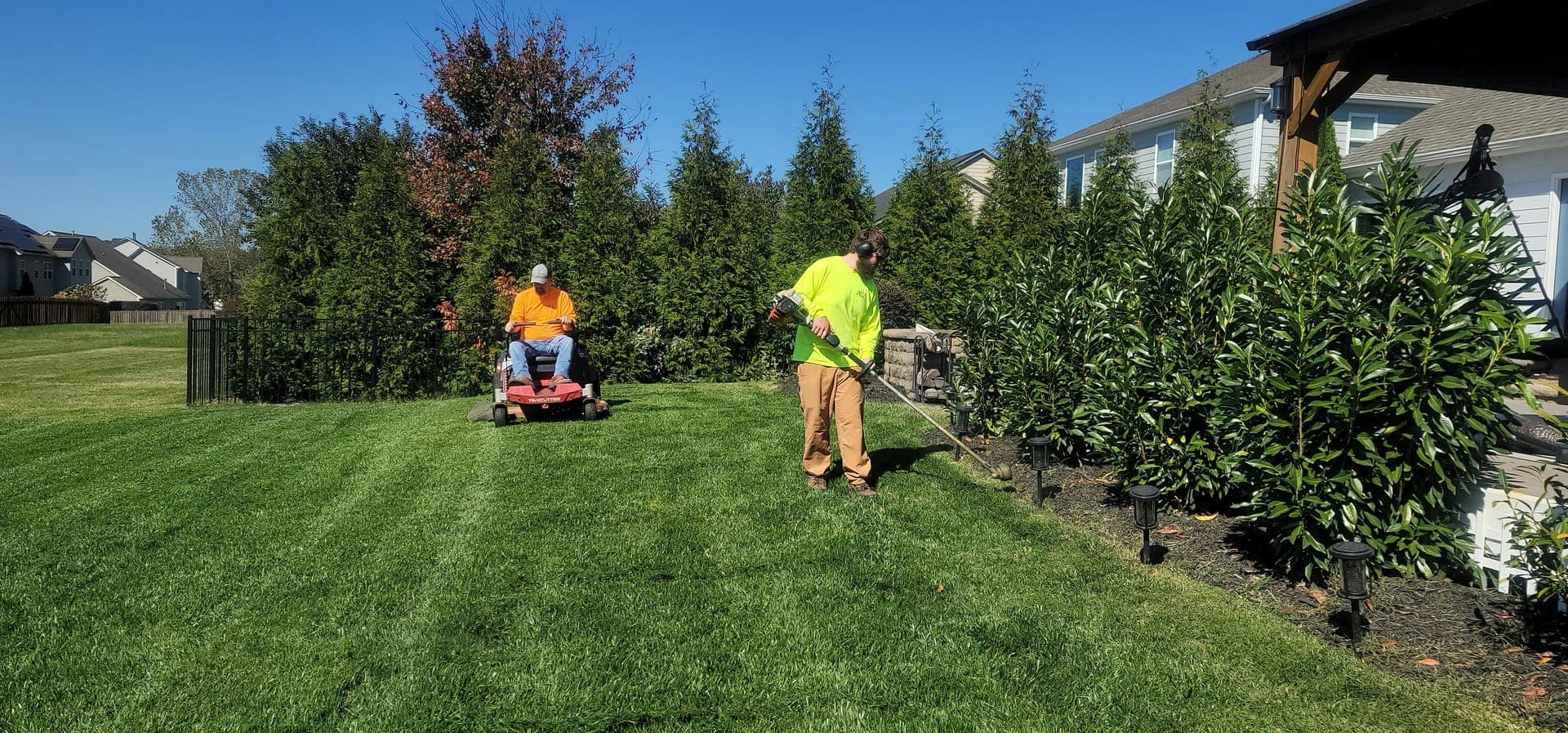
FIELD OPERATIONS · CREWS & DISPATCH
A NEARER JOB IS WORTH MORE THAN A BIGGER ONE.
Drive time is the silent cost that eats a crew's day. Demand capture built at the neighbourhood level, an enquiry path fast enough to win the job, and seasonal content indexed a season before the demand arrives.
WHO THIS IS FOR
Businesses that run crews and a dispatch board: cleaning and janitorial, landscaping and snow, electrical, plumbing and HVAC, moving, pest control, junk removal, and anything else where the day is measured in stops. Any size — owner-operators very much included. If you have ever lost a job you quoted first because someone else answered the phone faster, this page is written for you.
WHAT ACTUALLY BREAKS
THE PROBLEMS WORTH PAYING TO FIX.
01
Your leads are geographically wrong, and every wrong lead costs drive time
A generic city-wide campaign produces enquiries from one end of the region to the other and a crew burning ninety unbillable minutes driving between them. The fix is route-aware demand capture: service-area pages built at the neighbourhood and municipality level that actually reflect where crews already are, an intake that qualifies location before it qualifies anything else, and content that ranks for the intersection of service and place rather than service alone. Route density is a marketing deliverable, and almost nobody sells it that way.
02
The lead arrives and nobody sees it for four hours
In field service the job frequently goes to whoever answers first. Meanwhile the enquiry lands in a shared inbox, the owner is on a roof, and the dispatcher is never told. The deliverable is a capture-and-route path that is mechanically fast: submissions that reach the dispatcher's device and the CRM at the same instant, failure that is visible instead of silent, and an immediate confirmation to the customer so the gap between enquiry and human contact is not dead air. A form that silently drops a submission is worse than no form at all.
03
Seasonality wrecks your schedule and your content is written for one season
A snow contractor's website in July and a landscaper's in January are both dead surfaces. The work is building content whose seasonal pages are pre-built and pre-indexed before the season starts — irrigation blowout content indexed in August rather than October, snow contract content in September rather than after the first dump. Search engines and assistants both need lead time; a page published the week demand arrives has already missed it. A seasonal content calendar tied to the operational calendar is the concrete deliverable.
04
You are selling one-off jobs when the business is worth more on contracts
A recurring maintenance agreement smooths the schedule, raises enterprise value and cuts the cost of the next job to nearly zero. Most field service sites sell only the one-off. The engagement's job is to build the contract path — plan pages stating what is included per visit, visit frequency, pricing structure, term and cancellation terms — and to make the upgrade from one-off to agreement a designed path rather than something a technician remembers to mention.
05
Your best commercial revenue comes from property managers who shortlist on paper
Commercial grounds, janitorial and snow contracts are awarded by property managers and condo boards who want a certificate of insurance, a WCB clearance letter, crew counts, an equipment list, response-time commitments and references — before they will take a call. A commercial surface carrying those documents and figures is a different page from the residential one, targets a different query family, and is where the highest-value work on this page actually lives.
WORK IN THIS INDUSTRY
WE HAVE BUILT FOR THIS INDUSTRY.
- KaBright Clean Co
- Damn Good Electric
Real builds for Alberta field-service businesses, both on our portfolio. Builds only — no job counts, close rates or revenue figures are published for any client. See the portfolio.
WORKED SCENARIO
WHAT THE ENGAGEMENT LOOKS LIKE.
Illustrative and hypothetical. This is not a client, and nothing below describes any real engagement or any real result. It exists to show the shape of the work.
THE BUSINESS
An Edmonton-area grounds and snow business, four crews in summer and six trucks on snow, roughly 70 percent residential one-off work and 30 percent commercial contracts. The owner wants that ratio reversed. Enquiries arrive into a shared inbox that nobody watches between seven in the morning and five at night.
WHAT THE BASELINE WOULD FIND
Current Search Console impressions and clicks by query family and by municipality; median time from form submission to first human contact; the share of enquiries falling outside existing route density; listings accuracy across Google Business Profile and the major directories; mobile performance on a mid-tier Android; and a fixed prompt set of twenty local buyer-intent questions run across the major assistants.
WHAT THE ENGAGEMENT WOULD DO
Rebuild demand capture at the neighbourhood and municipality level, matched to where crews already run. An enquiry path that establishes the address first and delivers simultaneously to the dispatcher's device and the CRM, with a visible failure mode and an immediate customer confirmation. A separate commercial surface carrying insurance limits, WCB clearance status, crew and equipment counts, response-time commitments and scope by zone. Published, priced recurring plans with term and cancellation stated. A seasonal publishing calendar tied to the operational calendar, so each season's pages are indexed before that season opens. The SEO pass handles the service-plus-place surface, internal linking and mobile performance; the AEO pass states service areas and response commitments as text and publishes llms.txt.
HOW IT WOULD BE MEASURED
Measured against that baseline, with the typical 14-to-90-day movement window and no promised outcome. For this buyer the two figures worth watching are time-to-first-contact and the share of enquiries inside existing route density.
WHAT WE WOULD SELL YOU
IN THE ORDER THAT USUALLY MAKES SENSE HERE.
All four are separately purchasable, and the prices are published. The order below is the one that tends to fit this industry, not a package.
Every published number is on the pricing page, and the other industries we work in are on the industries index.
STRAIGHT ANSWER
WHAT WE CLAIM, AND WHAT WE DO NOT.
Clients typically see movement in 14 to 90 days, measured against a baseline we capture before the work starts. This is a typical-results claim, not a guarantee.
We do not offer performance guarantees, we do not promise a specific ranking or a specific number of leads, and there is no “we keep going until it works” clause. What we do instead is measure: a baseline is captured before the work starts, and the same measurements are re-run afterwards, so the change is something you can check rather than something we assert.
FAQ
FIELD OPERATIONS — QUESTIONS.
How do we get leads closer to our existing routes?
+
By building demand capture at the neighbourhood and municipality level rather than the city level, and by qualifying location first in the intake. Service-area pages that reflect where your crews already work, an enquiry form that establishes the address before anything else, and content targeting service-plus-place queries all push enquiries toward your existing route density. Drive time is the biggest silent cost in field operations, so a nearer lead is worth more than a bigger one.
Why do we lose jobs we quoted first?
+
Usually because first means first to make human contact, not first to send a price. The gap between someone submitting a form and a person speaking to them is where these jobs are lost, and it is typically an infrastructure problem rather than a sales problem: the enquiry sits in a shared inbox while the crews are in the field. Capture should reach the dispatcher's device and your CRM at the same moment, the customer should get an immediate confirmation, and any delivery failure should be visible rather than silent.
How do we win commercial contracts instead of one-off residential jobs?
+
By building a commercial surface that answers a property manager's shortlist questions before they call. That means a certificate of insurance and coverage limits, WCB clearance status, crew and equipment counts, stated response times, scope of work by zone, and references from comparable sites. Commercial buyers screen on documentation and reliability rather than price, and they do it on paper before anyone picks up a phone.
What should a seasonal business do with its website in the off season?
+
Publish the next season's content before the season starts, not when it arrives. Search engines and AI assistants both need lead time to index and incorporate a page, so irrigation blowout content should be live in August and snow contract content in September. A page published the week the first snow falls has already missed the demand it was written for. The off season is when the next season's surface gets built.
Can the website work with our dispatch software or CRM?
+
Yes — the enquiry path is built to deliver into whatever system your dispatcher actually watches, and to fail loudly if it cannot. What matters more than the integration is that no submission is ever lost quietly: if a lead cannot be delivered to the primary system, that has to produce a visible error and a fallback, not a thank-you page for a lead nothing captured.
How do we turn one-time customers into recurring agreements?
+
By making the agreement a real, priced, published product rather than something a technician mentions on the way out. A plan page stating what is included per visit, how often crews come, what it costs, what the term is and how to cancel converts far better than ask us about maintenance, because the customer can evaluate it without a conversation. Recurring revenue is what makes the schedule predictable and the business saleable, so it deserves its own page rather than a bullet point.
What does this cost?
+
Website builds start at $5,000, paid upfront against an agreed scope, and you own the result. The one-time SEO engineering pass is $1,500 to $2,000 and the one-time AEO / AI-visibility pass is $1,500 to $2,000. AI visibility tracking, if you want it, is $200 a month with a three-month minimum. We do not sell per-lead pricing, because per-lead pricing rewards volume and what you need is proximity.
How fast does this work?
+
Clients typically see movement in 14 to 90 days, measured against a baseline captured before work begins — a typical-results statement, not a guarantee. In field operations the mechanical items move first: listings accuracy, response-time infrastructure and mobile performance can change within days. Neighbourhood-level organic search and seasonal content take longer, which is exactly why seasonal work has to start a season early.
LET'S SCOPE IT.
A 20-minute call. We tell you which of the four is the right spend for a business like yours — including when the answer is the cheaper one.
Book a Free Call